
Software

APIs rely on precise date and time formats to ensure seamless data exchange. These seven industry-standard codes are essential for developers working with REST APIs, databases, and system integrations to avoid parsing errors and maintain compatibility.
ISO 8601 Standard Format for Dates
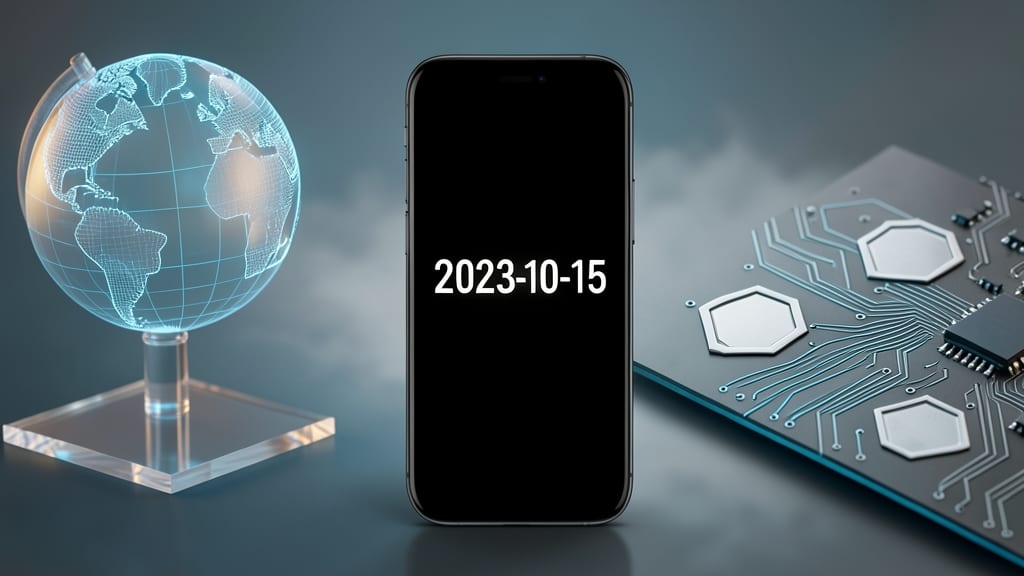
When building APIs that need to work globally, ISO 8601 isn’t just a recommendation—it’s the universal language. This standard’s YYYY-MM-DD format (like 2023-10-15) sorts chronologically when read left-to-right, eliminating ambiguity and reducing parsing errors across systems.
The real power comes from its flexibility: add T14:30:00 for time, include +00:00 for timezone offsets, or even specify fractional seconds (2023-10-15T14:30:00.123456+00:00). Supported by 99% of programming languages (Python, JavaScript, Java) and databases, it’s the default choice for REST APIs, logs, and configuration files.
Perfect for developers working with cross-platform systems or building APIs that need to scale globally. No more guessing which format your users will send—just reliable, machine-readable dates. ✨
RFC 2822 for Email and HTTP Headers
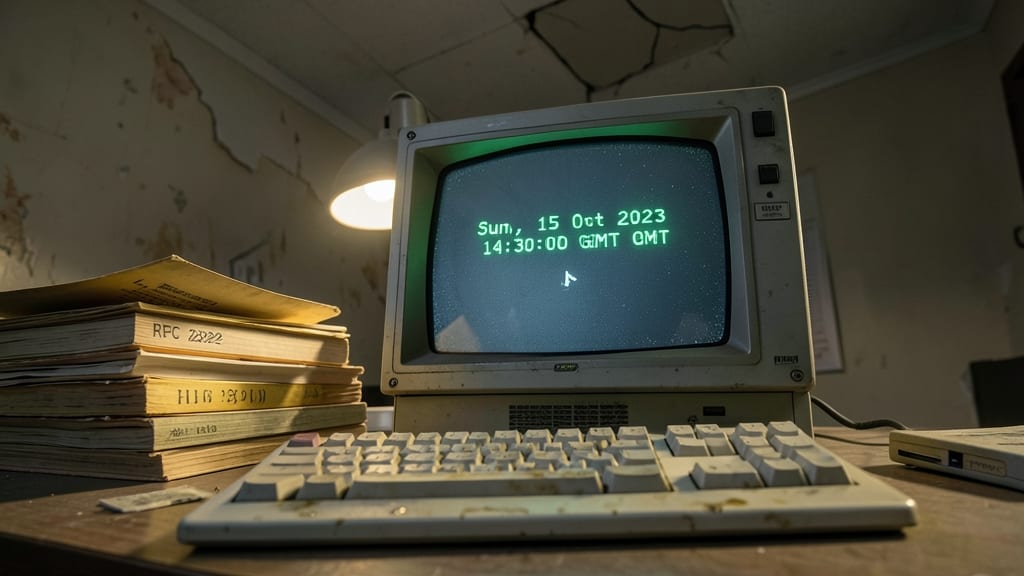
If you’re working with legacy systems or email protocols, RFC 2822 is the unsung hero of date-time formatting. Unlike modern standards, it uses a human-readable format like Sun, 15 Oct 2023 14:30:00 GMT, making it perfect for compatibility with older email servers and HTTP headers.
This format includes day of the week, month abbreviation, and UTC timezone offset, ensuring clarity across systems. It’s widely supported in SMTP emails, RSS feeds, and even some APIs that need to interact with older infrastructure. The trade-off? It’s less compact than ISO 8601 but excels in readability and backward compatibility.
Developers maintaining email systems or integrating with legacy APIs will find RFC 2822 indispensable. It’s the go-to when you need to balance human readability with machine parsing. ✨
Unix Epoch Time (Seconds Since 1970)

When storage space and speed matter most, Unix Epoch Time (seconds since January 1, 1970) becomes the developer’s secret weapon. Represented as a simple integer (like 1697436600), it eliminates parsing overhead and reduces database storage needs by up to 50% compared to string-based formats.
This format excels in high-frequency applications—think trading systems, IoT sensors, or log analysis—where milliseconds count. Most programming languages support it natively (Python’s time.time(), JavaScript’s Date.now()), and converting to/from human-readable dates is trivial with built-in functions. The tradeoff? No timezone or calendar details, but that’s rarely needed for internal calculations.
Perfect for backend engineers and data scientists who prioritize raw performance over readability. ⚡
MySQL DateTime Format (YYYY-MM-DD HH:MM:SS)
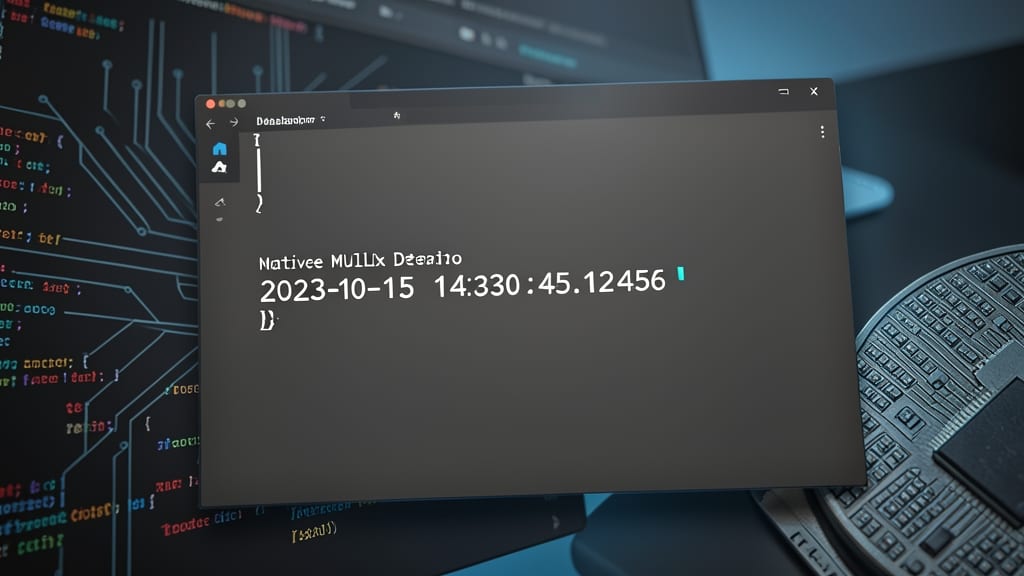
If you're building applications with MySQL, you'll encounter its native DateTime format more often than any other—it’s the default for storing both date and time in a single string. Unlike Unix timestamps or ISO 8601, this format includes microsecond precision (up to six decimal places) and is optimized for relational database operations.
The format follows YYYY-MM-DD HH:MM:SS[.ffffff], where the optional fractional seconds (.ffffff) allow for millisecond-level accuracy. This makes it ideal for logging, event tracking, or any application where time precision matters—like financial transactions or sensor data. MySQL also supports timezone handling when paired with the right configuration.
Developers working with MySQL databases (like WordPress sites, e-commerce platforms, or custom PHP apps) will find this format indispensable. It’s also the go-to for applications requiring consistent, human-readable timestamps without the overhead of Unix epoch conversions. 💻
JavaScript Date.toISOString() Format
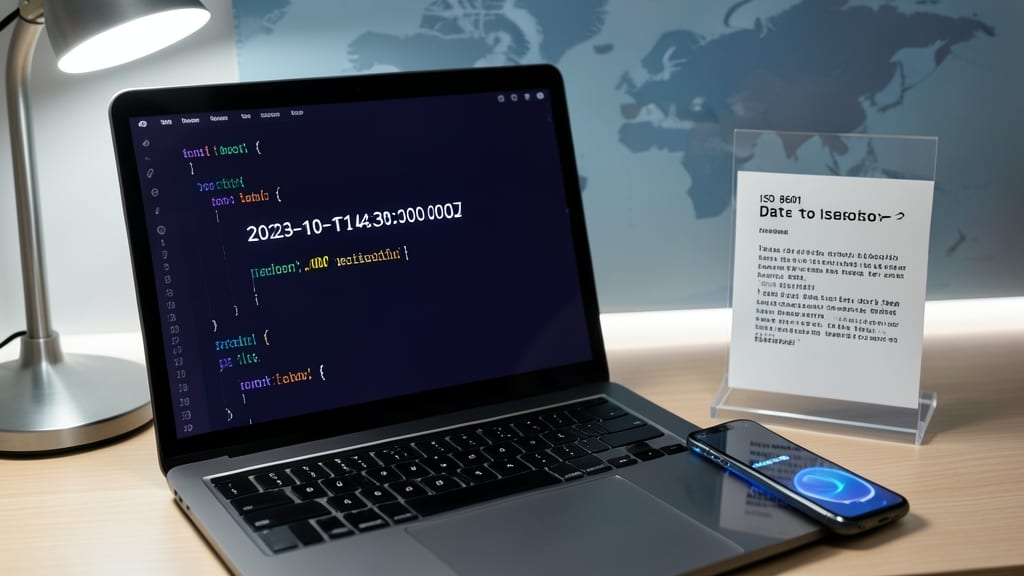
When building web applications, JavaScript’s Date.toISOString() method automatically generates a standardized format (e.g., 2023-10-15T14:30:00.000Z) that eliminates timezone headaches and ensures API consistency.
This format combines ISO 8601 compliance with UTC timezone handling, making it ideal for browser-based APIs and frontend-backend communication. The millisecond precision and "Z" suffix (Zulu time) guarantee predictable parsing across all modern JavaScript environments.
Frontend developers and full-stack teams will appreciate how this format integrates seamlessly with REST APIs, reducing client-side parsing complexity. ⚡
SQL Server DateTime2 Format

When your SQL Server applications demand sub-millisecond precision or timezone-aware timestamps, the DateTime2 format delivers exactly what you need. Unlike its predecessor, this format supports fractional seconds up to 100 nanoseconds and includes timezone offset information, making it ideal for financial systems, scientific data, or global applications where timing accuracy is critical.
With a range spanning from 0001-01-01 to 9999-12-31, DateTime2 avoids the Y2038 problem while offering 7 decimal places of precision. The format also handles timezone offsets (e.g., +05:30 for India Standard Time), ensuring consistency across distributed systems. For developers, it integrates seamlessly with T-SQL functions like CONVERT and CAST, simplifying data manipulation.
This format is a must for SQL Server developers building high-performance applications where time accuracy matters—whether you're tracking transactions, processing sensor data, or synchronizing global operations. ✨
Custom Localized Formats for User Interfaces
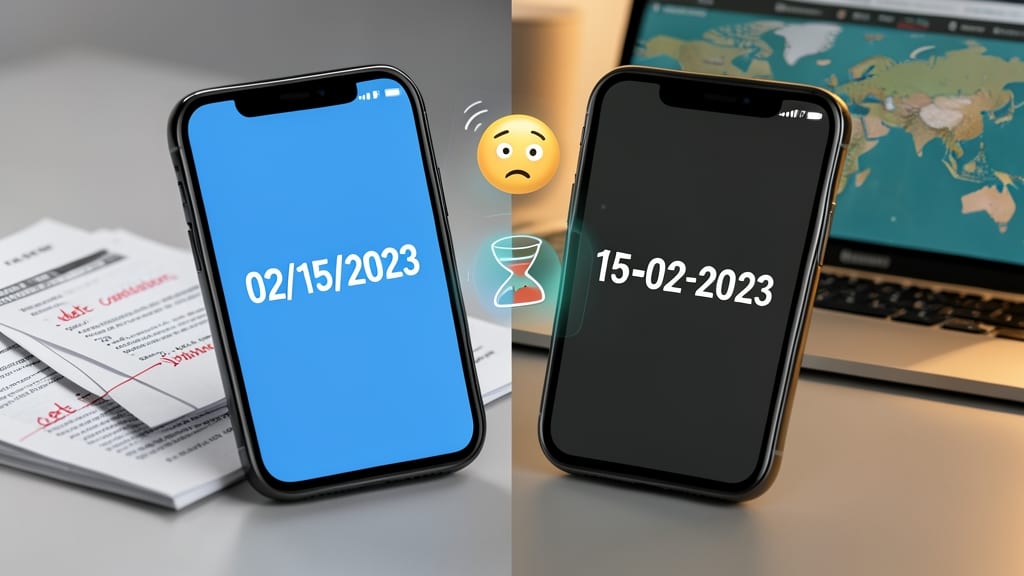
Ever launched an app only to find users confused by date formats? Localization isn’t just a checkbox—it’s a user experience game-changer. Formats like MM/DD/YYYY (US) or DD-MM-YYYY (EU) aren’t technical preferences; they’re regional expectations that reduce support tickets and boost trust.
Most frameworks (e.g., React Intl, i18n libraries) support dynamic switching between formats with minimal code. For example, JavaScript’s toLocaleDateString() adapts automatically based on the user’s locale, while platforms like Salesforce and Shopify enforce region-specific defaults. The key is consistency: align UI dates with local conventions (e.g., DD/MM/YYYY for Australia, YYYY-MM-DD for Japan) to avoid costly miscommunications.
This approach shines for global SaaS platforms, e-commerce sites, and enterprise dashboards where users span continents. Prioritize it when compliance (like GDPR’s regional data handling) or user retention hinges on clarity. ✨