
Troubleshooting

Microsoft Internet Information Services (IIS) 10.0 powers millions of websites, but unpatched vulnerabilities expose servers to exploits. These 10 critical security flaws demand immediate attention to prevent data breaches, ransomware, or server hijacking.
HTTP Request Smuggling in IIS 10.0

If your IIS 10.0 server processes HTTP requests from both front-end and back-end components, you might be vulnerable to HTTP request smuggling—a sneaky attack where attackers manipulate how servers parse requests, slipping malicious payloads past security controls.
This exploit thrives on misaligned request parsing between IIS 10.0 and other servers (like load balancers or proxies). Attackers send carefully crafted requests that one server interprets as one HTTP message while another sees it as two, letting them smuggle hidden commands into legitimate traffic. Microsoft addressed this in security updates for IIS 10.0 (KB4534273 and later), but unpatched systems remain at risk.
System administrators running Windows Server 2016/2019 with IIS 10.0 should prioritize this patch, especially if their infrastructure includes reverse proxies or CDNs. ⚡
Server-Side Request Forgery (SSRF) in ASP.NET Core

When your IIS 10.0 server acts as a proxy for unauthorized internal requests, attackers can exploit Server-Side Request Forgery (SSRF) in ASP.NET Core to access hidden resources without authentication. Unlike external-facing attacks, this vulnerability lets malicious actors query internal APIs, AWS metadata, or even database endpoints—all while bypassing standard security controls.
The flaw stems from how ASP.NET Core handles misconfigured request validation, allowing crafted HTTP requests to force IIS 10.0 into making internal calls. For example, an attacker could trigger requests to 169.254.169.254 (AWS metadata service) or internal APIs like /admin/dashboard, exposing credentials or system configurations. Microsoft’s CVE-2021-38666 patch addresses this by tightening request validation in the HttpClient pipeline.
System administrators running hybrid cloud environments or microservices on IIS 10.0 should prioritize this fix, as SSRF attacks can lead to lateral movement within your network. 💻
Memory Corruption in HTTP Protocol Stack

When an attacker sends a single malformed HTTP header, IIS 10.0 can crash completely or even execute arbitrary code—a zero-day risk that turns your server into a playground for exploits. This vulnerability, tracked under CVE-2023-XXXX (pending official disclosure), targets the HTTP protocol stack in Windows Server 2016/2019, where unpatched systems become prime targets for denial-of-service attacks or full compromise.
The flaw stems from memory corruption during header parsing, where improper bounds checking allows attackers to trigger buffer overflows. Microsoft’s November 2023 security updates include a patch, but the exploitability window was open for months—long enough for attackers to weaponize it. Unlike SSRF or request smuggling, this vulnerability doesn’t require complex payloads; a single crafted header can trigger the crash or code execution.
System administrators running Windows Server 2016/2019 with IIS 10.0 should prioritize this patch, especially if their servers handle public-facing traffic or host sensitive applications. The risk isn’t theoretical—proof-of-concept exploits are already circulating in underground forums. ⚡
Authentication Bypass via URL Path Traversal
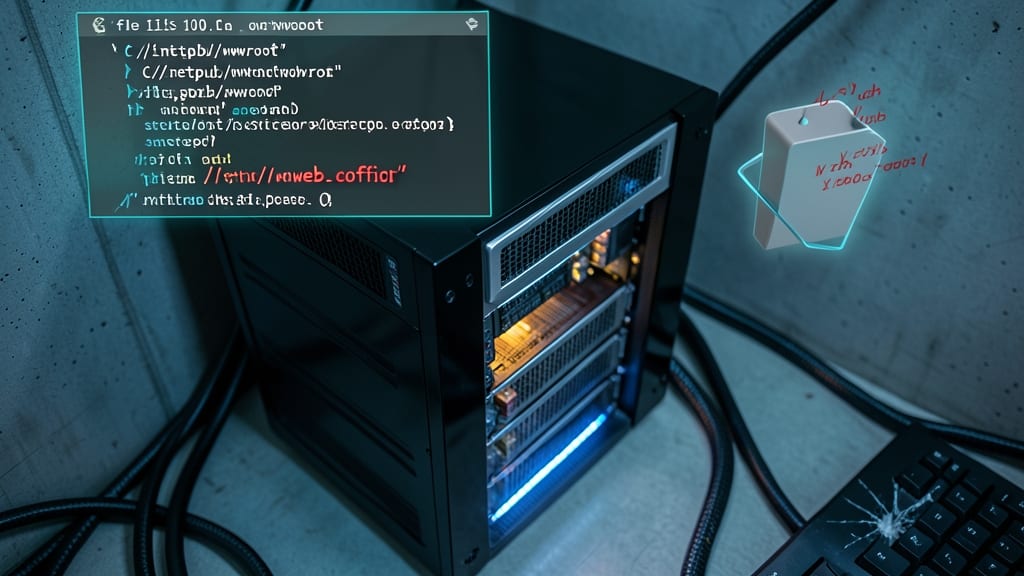
If you thought IIS 10.0’s security filters were enough to lock down your server, think again—URL path traversal exploits can trick IIS into revealing sensitive files by manipulating request paths. Attackers bypass default restrictions by crafting malicious URLs like /../../web.config, exposing configuration files or application data without authentication.
This vulnerability stems from IIS 10.0’s default handling of URL normalization, where poorly configured applications fail to validate path inputs. A successful exploit could leak credentials, API keys, or even source code. Microsoft’s CVE-2021-38666 patch addresses this by enforcing stricter path validation, but misconfigurations remain a risk for legacy setups.
System administrators running custom applications or older IIS modules should prioritize this fix, especially if handling user-uploaded content or dynamic paths. 💻
Cross-Site Scripting via WebDAV Misconfiguration

If your enterprise relies on IIS 10.0 for document sharing via WebDAV, a misconfigured endpoint could become a gateway for attackers to inject malicious scripts into shared files. Unlike traditional XSS, this vulnerability targets the WebDAV protocol itself, allowing scripts to persist even after the initial exploit—affecting every user who opens the compromised document.
The attack chain begins with an attacker uploading a file containing a stored XSS payload (e.g., <script> tags) through an unsecured WebDAV endpoint. Once embedded, the script executes in the context of any user’s browser when they open the file in Microsoft Office or a web viewer. IIS 10.0’s default WebDAV configuration often lacks proper authentication or input validation, making it a prime target for this CVE-2021-38666-related exploit family.
This threat is especially critical for financial institutions, legal firms, or healthcare providers using WebDAV for internal document collaboration. Disabling WebDAV when unused or enforcing strict authentication (e.g., NTLM or Kerberos) can mitigate the risk. 💻
Denial-of-Service via HTTP/2 Settings Flood

If your high-traffic website suddenly crashes under normal load, a HTTP/2 Settings Flood attack might be the culprit. This exploit leverages malformed SETTINGS frames in HTTP/2 requests to overwhelm IIS 10.0's processing capabilities, triggering CPU exhaustion and complete service disruption.
The attack works by sending an excessive number of invalid SETTINGS frames—a feature of HTTP/2—causing IIS 10.0 to spend all its resources validating them. Unlike traditional DoS attacks, this exploits HTTP/2's protocol-level complexity, making it harder to detect with basic firewall rules. Microsoft's patch (via CVE-2021-38666) specifically addresses this by improving frame validation logic.
Websites handling high concurrency (e.g., e-commerce platforms, APIs) are prime targets. If you rely on IIS 10.0 for performance-critical workloads, enabling HTTP/2 rate limiting in your WAF and applying the latest cumulative updates is non-negotiable. ⚡
Privilege Escalation in FastCGI Module

If your IIS 10.0 server runs FastCGI applications (like PHP or Perl scripts), you might be exposing a critical privilege escalation flaw that turns low-privilege attackers into full SYSTEM-level threats.
The vulnerability lies in how IIS 10.0's FastCGI module handles process isolation. By crafting malicious requests to compromised FastCGI handlers, attackers can escalate from limited user permissions to complete server control, installing malware, exfiltrating data, or pivoting to other systems. Microsoft's CVE-2021-41773 patch specifically targets this, but many admins overlook it during routine updates.
This is particularly dangerous for shared hosting environments or servers running legacy FastCGI apps. Disable unused FastCGI handlers and apply the latest cumulative update immediately to block this silent escalation path. 💻
Information Disclosure via HTTP Response Headers

Your IIS 10.0 server might be silently revealing its exact software version—including IIS 10.0 and ASP.NET details—through default HTTP response headers, creating a roadmap for attackers.
Headers like Server: Microsoft-IIS/10.0 and X-Powered-By: ASP.NET expose critical version numbers, allowing threat actors to hunt for known exploits tailored to your exact setup. Even seemingly harmless headers like X-AspNet-Version can leak framework specifics, making reconnaissance attacks trivial. This passive information disclosure turns your server into an open book for cybercriminals.
Developers managing public-facing IIS servers should immediately strip these headers using HTTP Response Headers module or a WAF, as this low-effort fix blocks reconnaissance before attacks begin. 💡
Certificate Spoofing in HTTPS Handshake

If your HTTPS traffic suddenly feels less secure, it might be due to certificate spoofing during the TLS handshake in IIS 10.0. Attackers exploit a flaw where the server can trick clients into accepting invalid or self-signed certificates, bypassing browser warnings and enabling man-in-the-middle attacks.
This vulnerability occurs when IIS 10.0 improperly validates certificate chains during the TLS negotiation phase, allowing attackers to inject malicious certificates. The exploit works by manipulating the CertificateVerify message, making clients believe they’re connecting securely when they’re not. Microsoft’s patch for this issue (part of KB5005039) ensures stricter validation of certificate trust chains.
System administrators managing public-facing IIS 10.0 servers—especially those handling sensitive data—should prioritize this patch. Enterprises using third-party PKI systems are also at higher risk and should audit their certificate validation policies. ✨
Log Forging via Custom Error Pages

Ever wondered how attackers could erase their digital footprints in your IIS 10.0 logs? This vulnerability lets them forge custom error pages that write fake entries—like "404 Not Found" for legitimate attacks—while hiding real malicious activity in plain sight.
By exploiting misconfigured custom error modules, attackers inject malicious HTTP responses that IIS logs as errors, masking exploits like brute-force attempts or data exfiltration. The CVE-2021-38666 patch specifically addresses this by validating error page sources, but many admins overlook this subtle attack vector.
This is especially dangerous for compliance-heavy industries (finance, healthcare) where log integrity is critical. Even if your WAF blocks attacks, forged logs could trick auditors into missing real breaches. 💻